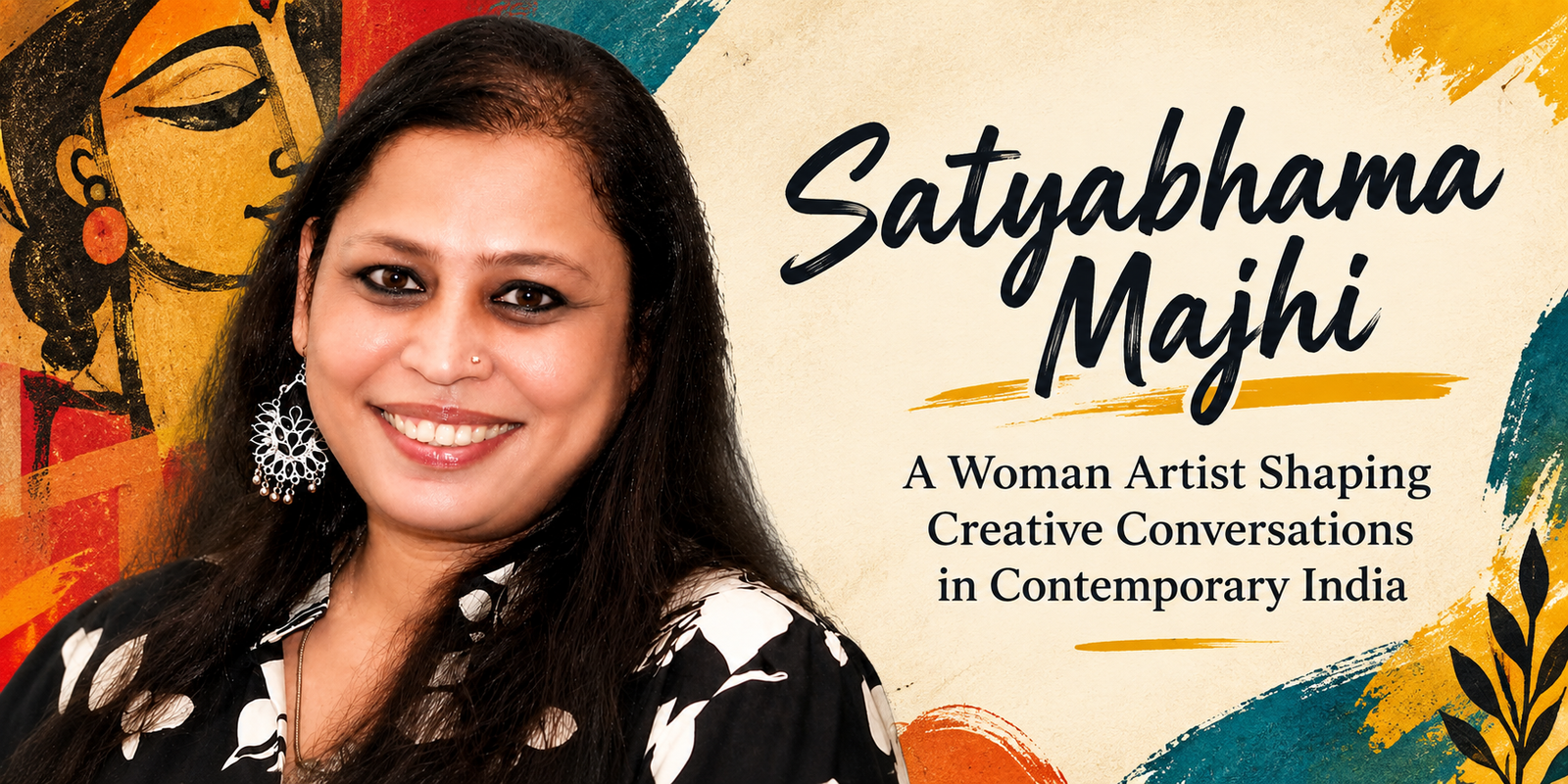
The Artistic Journey of Satyabhama Majhi: From Bhubaneswar to the National Art Scene
The journey of an artist is often shaped by the places they grow up in, the people they encounter and the questions that emerge from observing society. For Satyabhama Majhi, a contemporary visual artist based in Bhubaneswar, Odisha, this journey has developed through a continuing dialogue between everyday life, cultural traditions, communities and the changing environment.
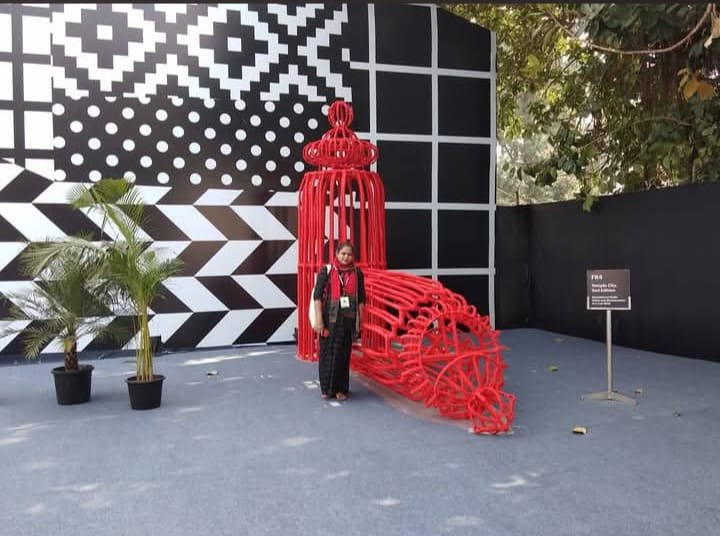
Working across painting, sculpture, installation, photography, mixed media and public art, Majhi has built a multidisciplinary practice that moves between galleries, public spaces, educational environments and communities. Her career reflects an expanding understanding of contemporary art—one that connects individual artistic expression with wider questions of culture, memory, ecology and social participation.
Roots in Bhubaneswar
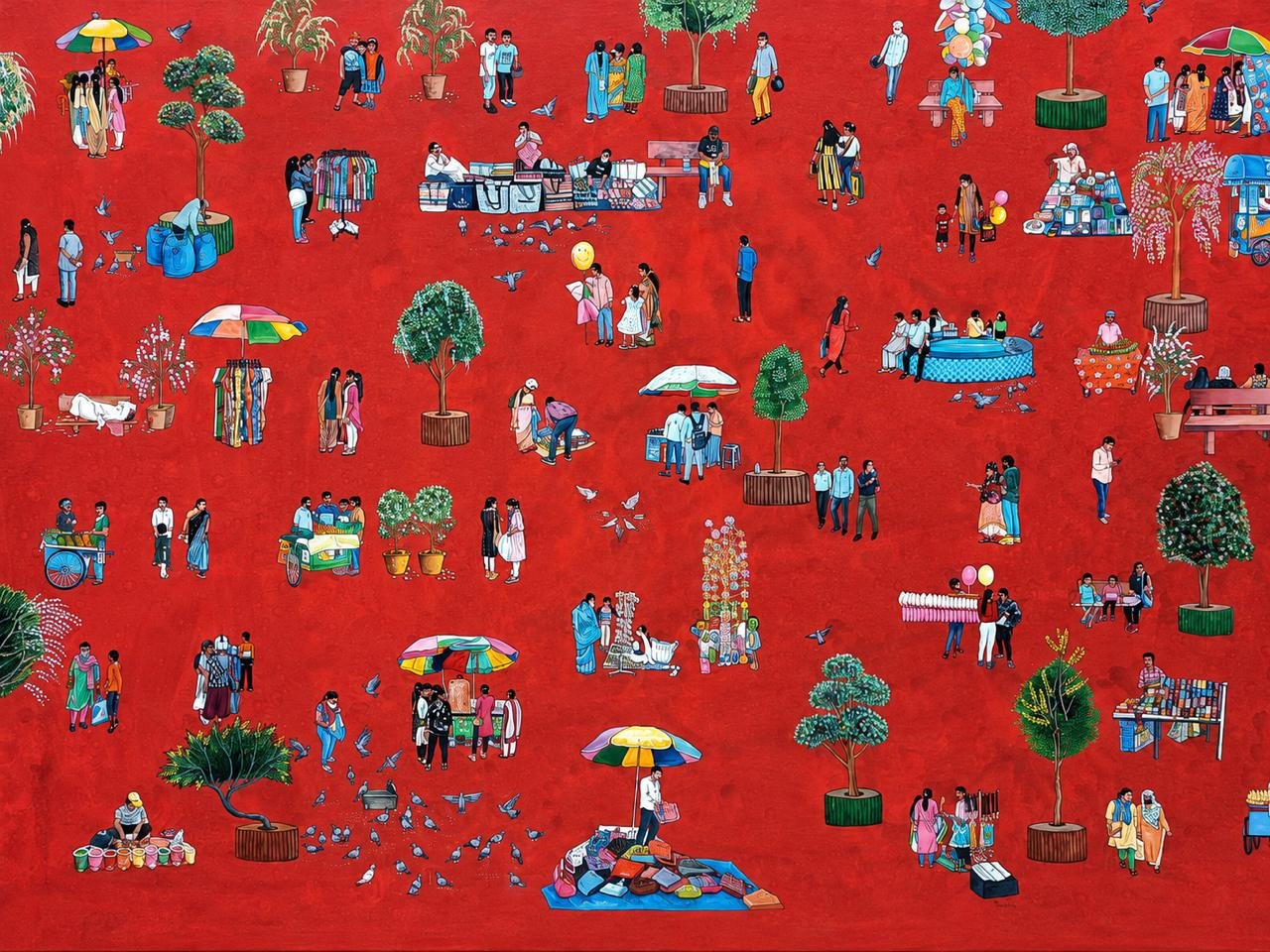
Bhubaneswar has played a significant role in Majhi’s artistic development. Growing up in the city, she had the opportunity to observe everyday life at close range. Her childhood experiences around her father’s shop in a local marketplace exposed her to the many layers of urban life.
Markets brought together people from different backgrounds and created a constantly changing visual environment. Customers, vendors, animals, celebrations, neighbourhood activities and everyday conversations formed part of the landscape that Majhi observed during her formative years.
These experiences later became important references in her artistic thinking. Instead of separating art from ordinary life, she began to see artistic possibilities in everyday situations.
The changing city also became an important source of reflection. As Bhubaneswar developed and familiar spaces changed, questions about memory, identity and modernization became increasingly relevant to her work.
Formal Art Education
Majhi pursued formal education in art and holds a Master of Fine Arts in Traditional Art.
Her education provided a foundation in traditional artistic practices while her later career expanded into a much broader multidisciplinary field. Painting became one of the important components of her practice, but she also explored sculpture, installation, photography, mixed media and public art.
This movement across different media allowed her to respond to subjects in different ways. A painting could explore memory through composition and colour, while a public mural could engage directly with a neighbourhood and its residents.
Her practice therefore developed not around a single medium but around ideas and experiences.
Developing a Contemporary Visual Language
As Majhi’s artistic practice developed, everyday life remained an important source of inspiration.
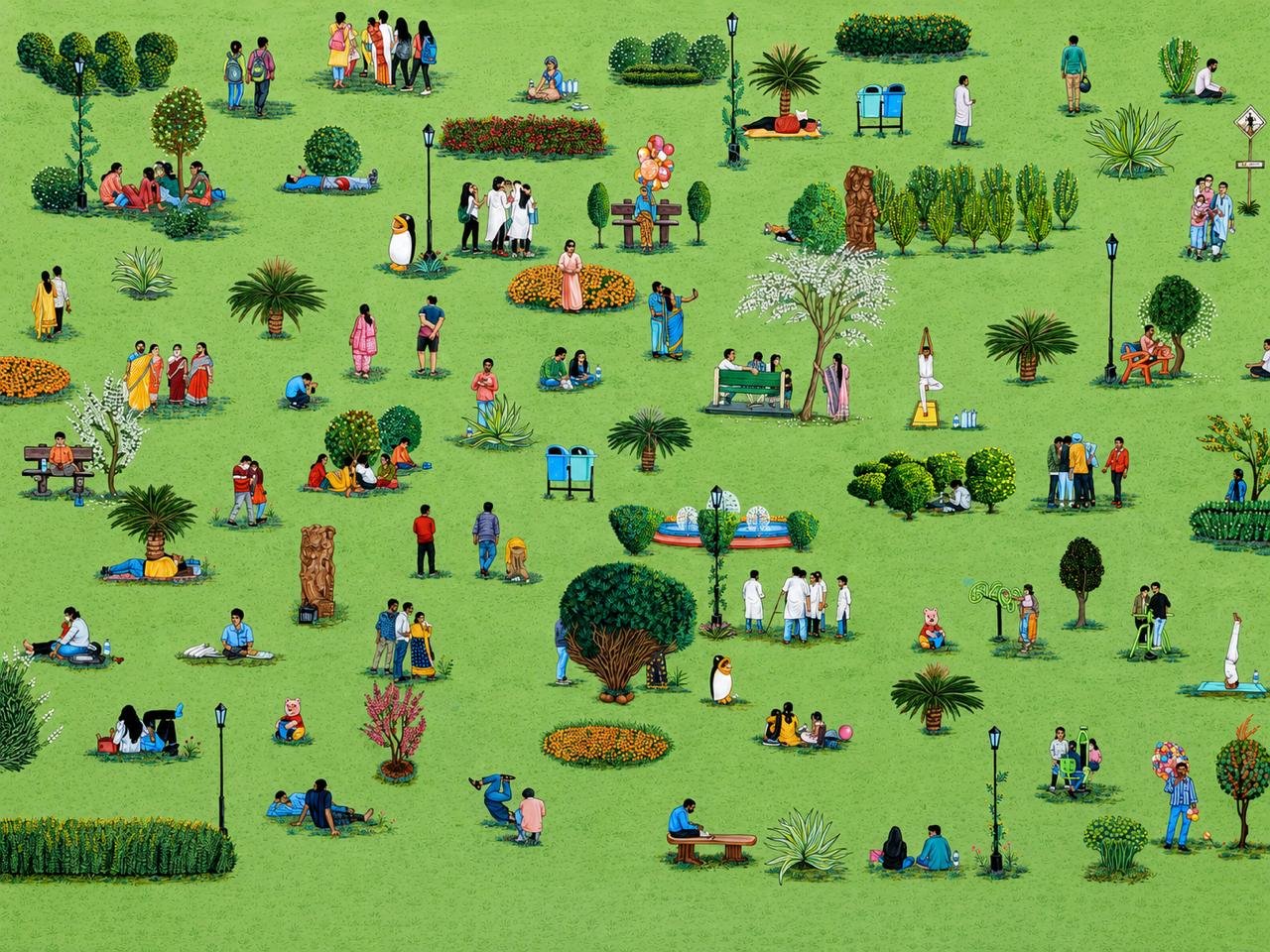
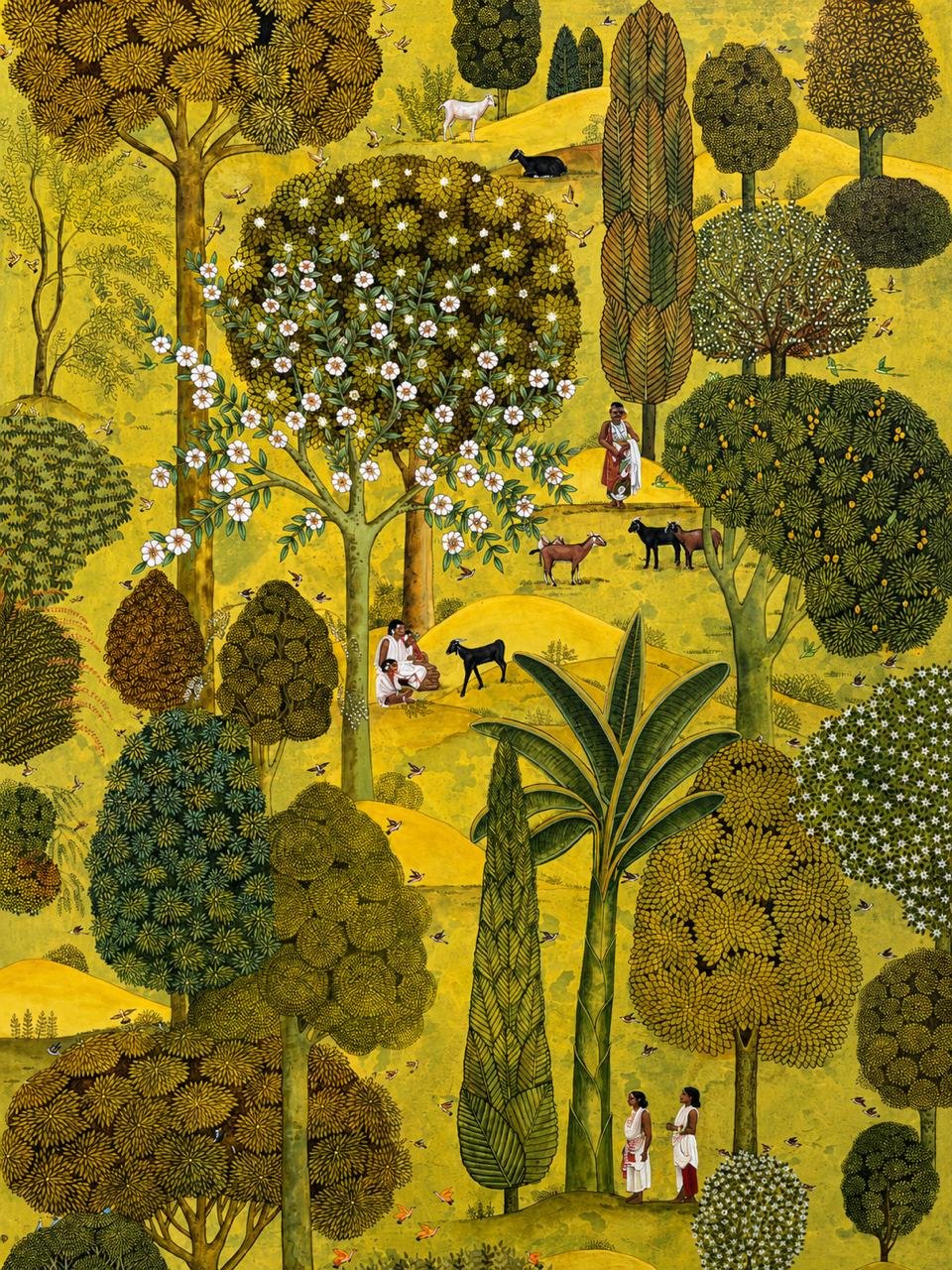
Her works frequently incorporate people, animals, plants, architecture and other elements of the surrounding environment. Multiple figures and recurring forms can create complex compositions that suggest movement and interaction.
Rather than focusing exclusively on individual portraits, her visual narratives often present communities and collective environments.
This approach reflects her interest in understanding how individuals exist within larger social and cultural systems. A person in her work may be part of a marketplace, neighbourhood, village or natural landscape, creating a connection between the individual and the environment.
Exploring Traditional and Contemporary Art
One of the distinctive aspects of Majhi’s career is her ability to bring traditional cultural references into contemporary artistic practice.
Her M.F.A. background in Traditional Art provided an important foundation, but her artistic interests continued to expand. She became increasingly engaged with indigenous visual traditions, natural materials, community knowledge and ecological relationships.
Her engagement with the Dongaria Kondh community and the Niyamgiri region of Odisha became particularly significant.
Over more than a decade of engagement, she explored cultural practices, livelihoods, visual traditions and the relationship between the community and its natural environment.
This experience broadened her artistic enquiry beyond the urban environment of Bhubaneswar.
Niyamgiri and a New Direction
The Niyamgiri hills became an important point of artistic reflection for Majhi.
Her observations of the region led her to explore relationships between landscape, culture, livelihood, spirituality and identity. The hills were not simply a geographical backdrop; they became connected with questions about how people understand and inhabit their environment.
This engagement also influenced her use of natural materials.
Majhi experimented with materials including chalk stone, charcoal, turmeric, geru soil and brown stone to develop natural pigments. Such experimentation brought a physical connection between the landscape and the artistic process.
Her work consequently began to explore not only how indigenous culture could be represented but also how its relationship with nature and material could influence contemporary artistic practice.
Exhibitions and Artistic Platforms
As her practice developed, Majhi participated in exhibitions, workshops, artist camps, residencies and other artistic programmes.
Her documented engagements include platforms such as Bharat Bhavan in Bhopal, Nature Morte in Gurgaon, Lalit Kala Akademi, Odisha Lalit Kala Akademi and Bhubaneswar Art Trail.
She has also been associated with initiatives such as the Gram Art Project and Vancouver Biennale-linked projects.
These platforms provided opportunities for her work to move beyond a local context and engage with broader conversations in Indian and international contemporary art.
Artist residencies and collaborative projects were particularly important because they allowed her to work directly with communities and other practitioners.
Art Outside the Gallery
An important development in Majhi’s career has been her movement from conventional exhibition spaces into public and community environments.
She has participated in public-art and mural projects in Cuttack and Bhubaneswar, including projects associated with major sporting and cultural events.
Her documented work includes public-art activities connected with the Men’s FIH Hockey World Cup, Asian athletics events and projects such as Pago and Thought Loom.
Public art provided Majhi with a different relationship with audiences.
In a gallery, visitors intentionally enter a space to view art. A public artwork, by contrast, encounters people during their everyday lives. It can become part of a street, neighbourhood or community environment.
This difference appears to align closely with Majhi’s wider interest in connecting art with ordinary people and public life.
Art and Community Participation
Community participation gradually became an important dimension of Majhi’s professional identity.
Her work with communities has included interaction with indigenous groups, rural communities, schools, children and urban neighbourhoods.
This practice reflects an understanding of art as a process of dialogue rather than simply a finished object.
Her long-term engagement with the Dongaria Kondh community is one example of this approach, while her public murals and educational workshops provide other examples.
Through these activities, Majhi has explored how creative practice can provide opportunities for people to share experiences, cultural knowledge and perspectives.
Working with Children
Another major area of her career has been art education.
For approximately 15 years, Majhi has worked with children and schools through creative-learning programmes and workshops.
Her educational approach encourages children to begin with their own observations and experiences. Instead of simply reproducing standard images, participants can explore subjects such as trees, animals, festivals, household activities, village journeys and personal memories.
She has been associated with initiatives including Kalpanadham and programmes involving organisations such as Gram Vikas and Tata Trust.
These educational activities demonstrate another important aspect of her career: the belief that artistic creativity can be a tool for learning, expression and community development.
Recognition from Lalit Kala Akademi
Majhi’s artistic development has also received institutional recognition.
She received the National Lalit Kala Akademi, New Delhi Scholarship for 2009–2010, an important recognition within India’s visual-art landscape.
In 2012, she received the Odisha Lalit Kala Akademi State Award.
These recognitions form important milestones in her professional journey and acknowledge her contribution to visual art.
A National Platform
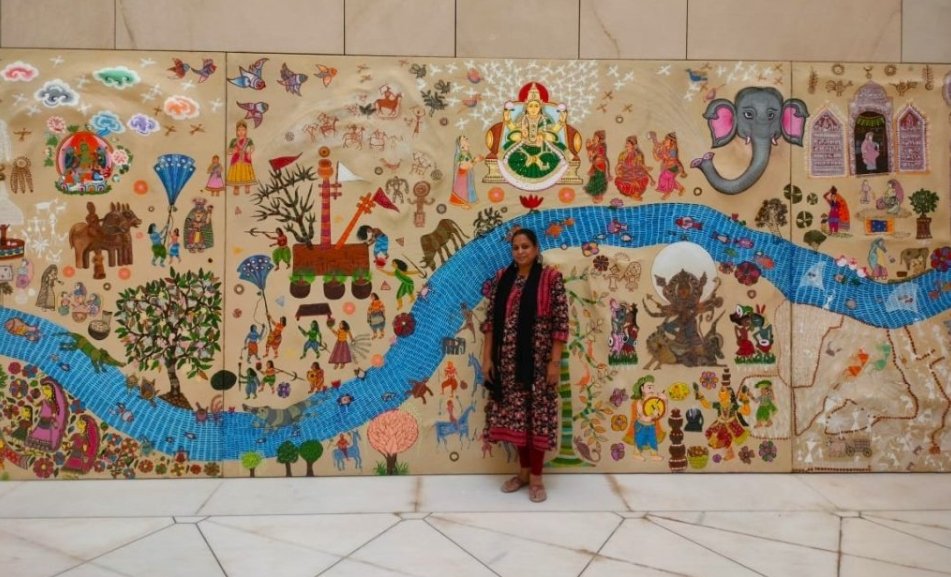
One of the notable milestones in Majhi’s career came in 2023, when she served as a Co-Sutradhar and creative contributor to People’s Wall – Jan, Janani and Janmabhumi.
The participatory project was created for the New Parliament House in New Delhi through the Lalit Kala Akademi.
The project brought together women artists and artisans from different parts of India and incorporated regional artistic traditions and visual languages.
Majhi’s involvement in such a large collaborative project represents the expansion of her artistic journey from local observation and community engagement toward a major national cultural platform.
Continuing the Journey
Today, Satyabhama Majhi’s artistic journey continues to move across different spaces and disciplines.
Her work brings together the memories of Bhubaneswar, the cultural landscapes of Odisha, indigenous artistic traditions, natural materials, public spaces, education and community participation.
She also serves as Secretary of the Sasatwa Foundation, through which her artistic and community-oriented interests intersect with wider social engagement.
Her career demonstrates that an artist’s journey does not necessarily follow a straight path from studio to gallery. For Majhi, the path has moved through marketplaces, classrooms, villages, hills, public walls, exhibitions, residencies and national collaborative projects.
Looking Ahead
The continuing evolution of Satyabhama Majhi’s practice reflects the possibilities of contemporary Indian art when artists remain connected to their surroundings.
Her work brings together traditional knowledge and contemporary experimentation, individual creativity and collective participation, urban experience and ecological awareness.
From the streets and marketplaces of Bhubaneswar to Niyamgiri and from community workshops to the New Parliament House project, her journey demonstrates an expanding artistic vocabulary shaped by observation and engagement.
Her career is ultimately a story of movement—between places, mediums, communities and ideas. It is this ability to connect different worlds that has become one of the defining characteristics of Satyabhama Majhi’s artistic journey.
As she continues her work as an artist, curator, educator and community practitioner, her practice remains closely connected to the questions that have shaped it from the beginning: How do people relate to places? How does culture survive change? How can art preserve memory? And how can creativity bring communities together?
Those questions continue to provide the foundation for an artistic journey that has grown from local experiences in Odisha into a broader engagement with contemporary Indian art. (wikigenuine.org)